
Chapter 3: Late for Lublin
Marta told me how she'd made a small discovery. In her persistent searching for detail, answers to our questions, and scraps of insight that might help us connect the next dot, Marta had come across a rare published mention of Rita Rey.
These were frenzied days.
We talked. Many times by phone. More by WhatsApp.
We raced from "could we..." to "let's go".
And just like that, the plans were drawn up. I knew that what I wanted to do as soon as possible was capture the moment. I wanted Marta to relay her story on camera whilst it was as fresh as possible. Take us through the journey so far.
As an avid documentary watcher, and sometimes maker (more on that another time) I wanted to get the on-camera conversations off the ground. A chance for Marta to bring us all bang up to date before too much more had happened, in that classic documentary talking-head style.
We would visit Marta's old apartment in Warsaw, the very place where she first found the abandoned manuscript in the trash.
She'd also started making connections. A friend of friends, she'd been introduced to the former editor in chief of the Polish version of Vogue. A contact who had, like me, shown interest in Marta’s story and was offering a little consultation or support. Some ideas on where this could go. And critically, some perspective on the quality of Rita’s novel.
That, then, we could capture too. A coffee catch-up. I could snap shots of them discussing progress. Sharing ideas. All useful material to weave into the documentary.
An exciting schedule to begin.
Now? A question of when.
It would be weeks, not months away. That much I was settled on. I wanted to jump into the thick of it. We'd need multiple shoots across months if not years, but better to start fast whilst the early discoveries were fresh.
But then again, if something of particular interest were to pop up? Maybe, we'd flex around that. Only if, of course.
Marta worked at Apple when I knew her. Her stints at PVH, Patagonia, and even the European Union demonstrate her professional success. I truly believe however, that investigative journalist might be her next calling.
It was a tantalising prospect.
Barely believable.
Marta told me how she'd made a small discovery. In her persistent searching for detail, answers to our questions, and scraps of insight that might help us connect the next dot, Marta had come across a rare published mention of Rita Rey.
A book, recording the accounts of thousands of participants in the Warsaw Uprising, had given us our first recorded reference to Rita.
Alojzy Leszek Gzella. An esteemed writer himself. Journalist, editor, publicist, and historian of the Lublin press. Author of books on the defense of Lublin in 1939, co-founder of the Lublin Rotary Club, and first governor of Rotary International for Poland, Belarus, and Ukraine.
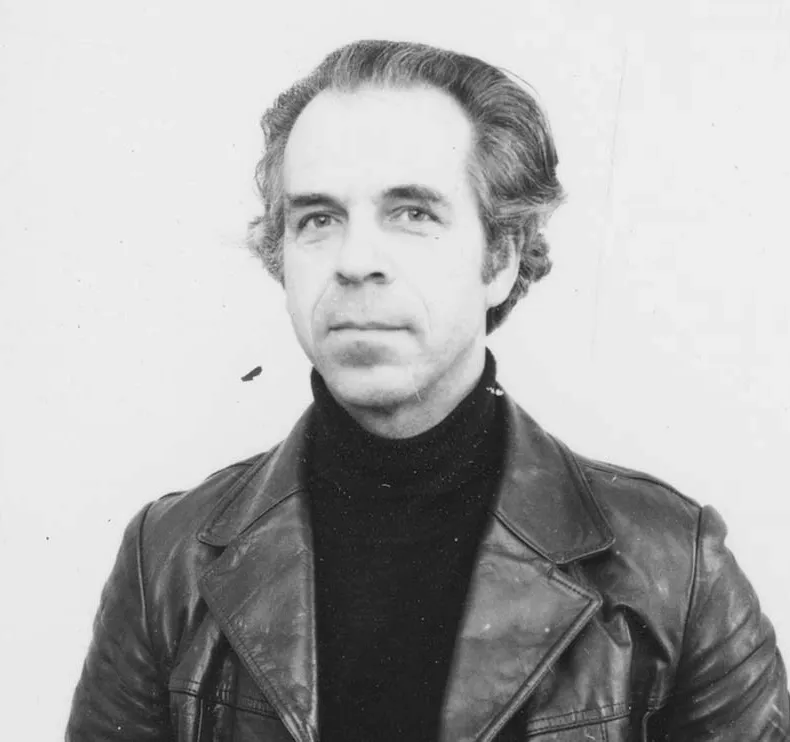
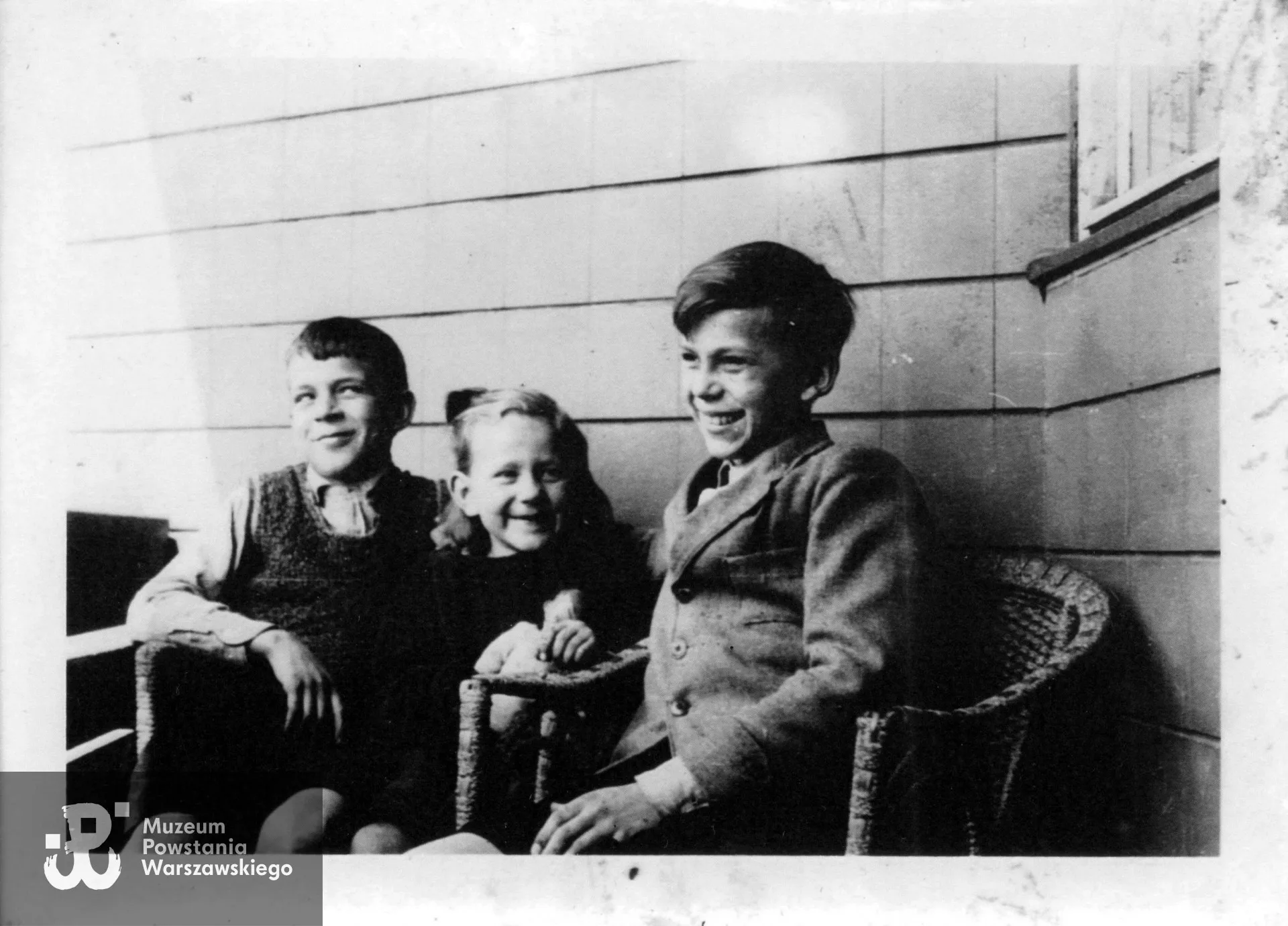
Born June 19, 1932 in Pelpin, Gdańsk Voivodeship, Alojzy was just 12 during the uprising.
Strange though it may sound, it's this phase of his life that is of most immediate interest to us and our story.
The book Marta had laid her hands on, included interviews with thousands of people. Including, Mr Gzella. In it, he's asked about his experiences as a 12 year old during the uprising. And amongst his answers, this line.
"I also remembered that in the same building, we lived on the sixth floor, and on the fifth floor, a writer."
The transcript of the interview continues. "Do you remember what her name was"?
"Yes, yes. It was Zofia Schenk, a baroness, but she wrote under the pseudonym Rita Rey."
Across the whole World Wide Web we’d found close to nothing on Rita. And yet here was a first hand account of someone who actually met her as a child.
I can’t honestly remember who it was that said it first. But both of us had thought it. And whoever got there first was mere milliseconds ahead.
Might he still be alive?
12 in 1944. He’d be mid 90s in 2024. It seemed… if not impossible, fairly unlikely.
Marta felt she should make a small enquiry. And I was about to have my first lesson in Polish persistence.
Within a few days I got the message. Alojzy Gzella had been found. And Marta had managed to trace him to a care home in Lublin. Quite how I still don’t entirely know. As was becoming more frequent, sometimes things would happen at rapid pace, faster than I had time to fully unpack or get a grip on.
Besides, Marta always makes things feel so effortless she would brush off any enquiry as though it were a highly normal thing. "Oh I just found him."
The interview we’d found with Mr Gzella was tantalising.
"Later, I came across her various works, previously published (I came across them after the war, because she was still alive for a few years after the war), novels, short stories. But what amused us as boys was that these two women, this writer (we didn't know she was a writer then), would go down to the basement with sheet music under their arms. That these women... Everyone there carried something, either food or a warmer coat, and they had sheet music under their arms. That was Rita Rey."
As I’ve mentioned before, Marta is not a filmmaker. But she is, without even realising it, an incredible documentary film producer in the making. The great partner and collaborator every filmmaker needs to reach further and further into the impossible.
Before I’d even taken on board that she had located Mr Gzella, alive and well, she remarked how she’d spoken to carers at the home where he now resided, explained our story, and begun a communication with him.
Of course she had.
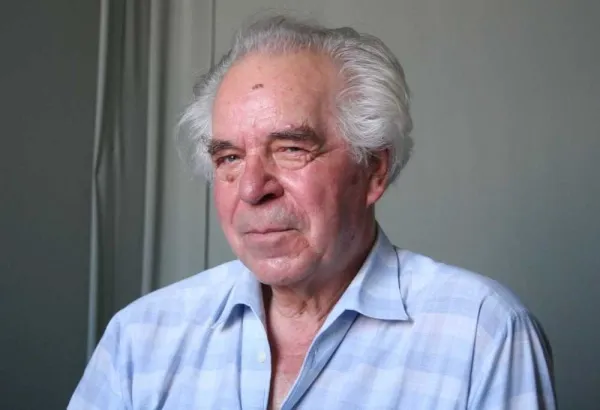
Through this intermediary we quickly exchanged notes. Mr Gzella remembered Rita to this day. His memory was not — as we feared may be the case owing to a long life well lived — faded in the slightest. He remembered her. He was 92 but still recalled his encounters some 80 years previous.
In fact, even more astonishing to me, we were told how Mr Gzella had at various points in his life put considerable time and effort into tracing the work of Rita. He had long remembered his interactions with this enigmatic character in the gathered basement of their flats at Marszałkowska 56 in Warsaw, at the height of Nazi occupation.
His research into her work was considerable. We were told. And he had remarked how he had always dreamed of finding more of her work.
I’m always conscious of how much I ask of people when I invite them to participate in a project on screen. Most of us will never have imagined being interviewed on camera and speaking in a documentary. And so, I always feel cautious. I try to be delicate, sensitive, and empathetic. It's incredibly important to me that anybody I approach feels completely comfortable to participate — and always feels able to say no.
This though? A complete first. Never before had I even dreamed of asking someone in their 90s to participate in a project.
But the thought of conducting a brief interview with someone who had met Rita, who may potentially be the last living person on earth who had spoken with her… utterly engaging as an idea.
And so Marta Marta’d it. We gently enquired, and the response was… a delight. Mr Gzella would be more than happy to speak with you on camera.
Wow.
It was March 15th. And suddenly, with Mr Gzella's interview now an incredible centrepiece of our first shoot, we were ready.
We would begin shooting in April — just a few weeks later. Maybe sometime around the week of the 8th. We could finesse the exact date to fit Mr Gzella, but flights could begin to be booked. A full 7 days worth of activities, this was to be an incredible baptism of fire for our documentary.
In many ways it felt like very humble beginnings for our journey with Rita. Still many mysteries remained, but we had for the first time uncovered a little more about her professional life. We’d found her articles. We knew what she looked like. And now we’d found someone who had ACTUALLY met her.
A fellow Rita enthusiast. A fellow investigator in fact. It was the stuff of wild imagination.
And then the news came.
On Wednesday March 20th, 2024.
Mr Alojzy Gzella had peacefully passed away.
Comments ()